MIT CADR and LM-3
This collection covers the MIT CADR Lisp Machine lineage represented in the museum by the public LM-3 software and the usim emulator.
Articles
- CADR and Genera interface style guide provides a source- and runtime-grounded CADR visual profile, contrasts it with Genera without averaging the systems, and links the public System 46 font reproductions.
- Software areas and applications on the MIT CADR and LM-3 provides a release-bounded census of interactive applications, programming tools, services, storage and network facilities, engineering software, and games, plus all 55 maintained-tree
DEFSYSTEMnames and 34 canonical demo source files. - How CLIM was used across the CADR and Genera software catalogs records the pre-CLIM TV and EINE/ZWEI boundary for every CADR topic and contrasts it with later Genera CLIM applications, ports, integrations, and native alternatives.
- The MIT Lisp Machine Lisp Listener documents the per-window REPL, input editing, histories, process and package state, complete controls, and a fresh System 303 multiple-value observation.
- Lisp Listeners and editable input reimplementation specification gives the release-selectable System 46 and System 303 reconstruction contract, including ZDT/ZTOP, failures, screenshots, oracle gaps, and conformance tests.
- Reimplementation specification coverage tracks the finite D01-D60 specification worklist across CADR, LM-3, and Genera.
- TV window-system reimplementation specification gives a reconstruction-grade, release-selectable contract for System 46 and maintained System 303 raster, sheet, exposure, stream, selection, input, menu, frame, constraint, typeout, and environment behavior, with conformance tests.
- System Menu and program selection compares the pointer menu, System-key registry, recent-window stack, screen layouts, and creation-versus-reuse rules in System 46 and System 303.
- Program selection, activities, and window management reimplementation specification gives the release-selectable System 46 and System 303 contract for System-key and pointer selection, dynamic menu registries, Split Screen, live layouts, errors, visible states, and objective conformance tests.
- Screen Editor and Frame-Up layout design reimplementation specification gives the System 46 and maintained System 303 live Screen Editor contract, including complete staged pointer and typed-input trees, snapshots, Undo, geometry, attributes, partial failures, screenshots, and release-discriminating tests.
- Screen Editor and Frame-Up traces the live-window Screen Editor from System 46 through System 303 and Genera, inventories its complete pointer command surface, and distinguishes it from Frame-Up.
- Directory, difference, and buffer editors inventories Dired, BDired, and Edit Buffers commands and object models, including a runtime-confirmed System 303 unmark defect.
- File systems and file service separates the generic pathname/stream interface from System 46 QFILE, System 303 Local-File and LMFILE stores, and the QFILE and LMFILE server families, with exact protocol audits.
- Help, self-documentation, and Document Examiner documents CADR editor, System, Lisp, and flavor Help and compares them with the later Genera application.
- D07 reimplementation specification gives separate System 46 and System 303 dispatcher, registry, documentation, defect, runtime-oracle, and conformance profiles.
- The MIT Lisp Machine Inspector inventories object displays, history, navigation and mutation controls, and a synthetic-object runtime study.
- Peek on the MIT Lisp Machine documents every registered status mode, keyboard control and object menu in the pinned releases, with a fresh process view.
- Flavors, classes, CLOS, and the Flavor Examiner documents the CADR Flavors and entity/class facilities, every release-bounded ZWEI inspection command, and their later relationship to Genera's separate tools.
- The MIT CADR Error Handler and Window Debugger covers error dispatch, every ordinary and graphical control, live stack-frame behavior, and reviewed ordinary/window debugger captures.
- Trace, Stepper, breakpoints, and call analysis inventories execution-analysis controls and source/runtime findings from System 46 and System 303 through their Genera successors.
- Metering and performance analysis distinguishes System 46 LMETER and page tracing, LM-3 event metering, and the later layered Genera tools, with complete source-bounded control inventories.
- Disk labels, packs, checkout, and file-system repair separates DLEDIT, partition and load-band operations, destructive checkout, LMFILE pack/volume management, garbage collection, salvage, and bad-pack recovery.
- Tape systems and the Tape Utility Frame establishes the System 46 absence and documents the later LMI-derived System 303 Tape stack, four configured formats, complete user API, and every TFrame mode, command, option, gesture, and device/runtime boundary.
- ZMail on the MIT CADR and LM-3 studies the maintained mail reader, composition integration, architecture, and exact base-band load boundary; its command and keybinding companion inventories the complete audited command surface.
- ZMail filters, universes, and Profile semantics specifies the public System 303 definition languages, persistence and failure order, historical defects, and all 69 selected user-option declarations.
- ZMail named-command effect closure gives the ordered applicability, mutations, delegation, partial failures, and ownership of all 86 System 303 commands; mail-file format semantics specifies the exact public parsers, serializers, properties, and damaged-input behavior.
- D08 ZMail and mail composition reimplementation specification keeps System 46's composition-only implementation separate from the maintained System 303 reader and composer, with exact effective input trees, mail-file and submission ordering, partial failures, runtime blockers, and conformance tests.
- Converse, direct messages, and notifications traces System 46 QSend into maintained System 303 Converse, SHOUT, and NOTIFY, inventories their controls, and records the exact tested-band load blocker.
- CADR direct-messaging bindings and semantics supplies the normative System 46 and System 303 effective input trees, command effects, history rules, network adapters, defects, and failure order for D09.
- D09 Converse, direct messages, and Notifications reimplementation specification keeps public System 46 QSend, maintained System 303 Converse, and the tested System 303-0 loaded-world boundary separate, with explicit peer and screenshot oracles.
- SUPDUP, Telnet, and the Genera Terminal program documents the CADR two-process NVT architecture, complete Network-key controls, SUPDUP/Telnet protocol behavior, and the later Genera redesign.
- CADR Supdup and Telnet bindings and protocol semantics supplies D10's normative System 46 and maintained System 303 profiles, complete effective keyboard/pointer trees, lifecycle and parser order, exact SUPDUP/Telnet byte/effect contracts, defects, source-injected visual boundary, and tests.
- D10 network terminal applications reimplementation specification integrates those public CADR profiles with the separately bounded Genera Terminal profiles without treating the maintained tree as the tested base band.
- Network services and site utilities inventories the System 46 and live System 303 Chaos contacts, Hostat/Finger, EFTP entry points, security-sensitive EVAL/Telnet/remote-disk services, MIT-local building utilities, and their later Genera counterparts.
- Network transports and protocol architecture compares System 46 Chaosnet, EFTP and QFILE with maintained System 303 routing, broadcast, Lambda 3Com Ethernet, address resolution, controller tools, and explicit preserved-band limits.
- CADR microcode, microassembler, and console debugger reconstructs the 23-module UCODE build, two-pass assembler and output formats, incremental microassembly, remote-object inspection, and every release-bounded CC control while preserving the separate-debuggee safety boundary.
- CADR System 303 macroinstruction and microarchitecture reimplementation specification specifies the compiler-visible 16-bit macroinstruction stream and the 48-bit CADR control-store engine, including complete primary decode, effective addresses, destinations, fault restart, release deltas, and differential tests.
- CADR browser and WebAssembly implementation roadmap sequences the pinned
usimport through deterministic execution, boot, display, complete input, private storage, release, networking, and optional translation. - CADR-WEB reproducible museum release evidence scaffolding defines M14's closed static inventory, direct-input provenance, browser matrix, rights ledger, empty-production receipt-admission boundary, generated guide/report, and explicit nonclaim of runtime-offline behavior or CW4.
- CADR-WEB-303 ABI1.3 boot-media controller specification defines the selected disk registers, CCWs, asynchronous range service, volatile block-1 overlay, controller/media evidence, failures, and M4 conformance gate.
- CADR-WEB-303 ABI1.4 deterministic machine scheduler specification defines guest-slot event ordering, pinned-X11 I/O-board behavior, worker lifecycle, CDRSTATE5 and snapshot continuation, and the M5 simultaneous-event gate.
- CADR-WEB-303 ABI1.4 headless System 303 Listener boot oracle specification defines exact artifact preflight, raw Cadet boot and form input, source-bound Listener A/B/C semantics, post-observer settling, CDRM6I1 samples, READY3, bounded failures, and the native/Wasm M6 gate.
- CADR-WEB-303 M6-DEVID1 disk-evidence continuation policy records the separate retained-prefix/SHA-256-tail evidence profile,
CDRM6E1, READY4 binding boundary, and explicit non-ready runtime status. - CADR-WEB-303 ABI1.5 monochrome display and browser renderer specification defines the 768 by 963 raw framebuffer,
CDRDISP1dirty transfers, BOW polarity, integral browser presentation, synthetic native/Wasm pixel proof, and the explicit outstanding real-System-303 checkpoint oracle. - CADR-WEB-303 keyboard input reimplementation specification defines physical-key normalization, the complete CADR key vocabulary, deterministic press/release ordering, lost-keyup neutralization, and accessible browser controls.
- CADR-WEB-303 pointer and interactive lifecycle reimplementation specification defines calibrated tablet coordinates, button transitions, focus-loss recovery, pause and resume generations, reset, and closed worker protocol records.
- CADR-WEB-303 private disk-overlay reimplementation specification defines immutable-base overlays, crash-consistent commits, atomic import and export, quota failure, reload recovery, and private-data boundaries.
- CADR-WEB-303 audio and Votrax reimplementation specification defines the selected beeper, speech-event, sample, worklet, and deterministic native-oracle profiles while preserving their remaining runtime evidence gates.
- CADR-WEB-303 debugger reimplementation specification defines exact-boundary stops, breakpoints, paused read-only inspection, provenance, bug reports, resume behavior, and stale-owner safety.
- CADR-WEB-303 browser hardening and accessibility reimplementation specification defines the M13 hostile-input, resource, no-network, worker-loss, persistence, audio, and external accessible-control contract without claiming runtime closure.
- CADR-WEB-303 M13 conformance campaign checklist records each M13 F01--F15b evidence path and source hash, its bounded result, and the runtime work still required before C-M13 can close.
- CADR-WEB-303 ABI1.1 deterministic tracing and snapshot specification defines the new portable-core CDRGTRC1/CDRSNAP1 observation and continuation contract without presenting it as a historical CADR file format.
- CADR-WEB-303 ABI1.2 headless WebAssembly core specification defines the bare-module, dedicated-worker, streamed-artifact, fixed-memory, native/Wasm differential, and cross-target snapshot contract for M3.
- CADR-WEB portable core, host ABI, trace, and snapshot boundary records the instance-owned core boundary, versioned pull-style host ABI, lifecycle, deterministic request protocol, and staged trace and snapshot contract.
- Native CADR instruction-boundary oracle design freezes the exact pre-refactor execution witness used to prove portable-core state and ordered-mutation parity at every outer clock-slot boundary.
- What executes on CADR and Genera Lisp machines places the CADR two-level execution stack beside Ivory hardware and the Open Genera VLM without confusing loader records with processor instructions.
- CADR diagnostics, checkout, and hardware tools documents ordered machine and memory tests, destructive disk checkout, PROM and embedded-controller workflows, the continuity/probe test stand, and the complete source-bounded Chaos-board test surface.
- Emergency Break and the cold-load stream explains the independent recovery console across CADR, LM-3, and Genera and includes a verified System 303 evaluation.
- Emergency Break and degraded interaction paths reimplementation specification defines separate System 46 and System 303 entry, cold-reader, breakpoint, exact debugger-transition, ownership, failure, visual, and complete D04-owned input-tree profiles.
- EINE, the first Lisp Machine editor studies the exact late-1977 recipe-derived source corpus, definition-oriented file model, graphical interaction, and source-visible incomplete behavior; its binding companion inventories every initial keyboard, prefix, named-command, Help, minibuffer, EDT, and mouse entry.
- ZWEI and Zmacs on the MIT CADR and LM-3 documents the reusable editing substrate, Zmacs application, public System 46 source gap, maintained System 303 implementation, and verified runtime behavior; its binding companion gives release-bounded effective trees.
- Uses of the Super modifier aggregates established System 46/System 303 Super roles by application, including numeric arguments, dynamic debugger choices, ZMail, Spacewar, and modifier-normalizing boundaries.
- Uses of the Hyper modifier aggregates established Hyper roles by application, including editor aliases and arguments, C navigation, ZMail address units, Inspector mutation, Spacewar, and negative protocol mappings.
- EINE, ZWEI, and Zmacs editor-family reimplementation specification defines the data, operation, complete input-tree, lifecycle, failure, visual, and conformance contracts for the public profiles without filling the missing System 46 Zmacs layer from a later release.
- Directory, difference, and buffer editors reimplementation specification defines the public System 46 Dired and maintained System 303 Dired, BDired, Edit Buffers, List Buffers, and Kill Or Save Buffers profiles, including their complete local and incorporated inherited inputs and partial-effect order.
- Operating CADR through the Xvfb computer-use harness documents the sentinel-owned private-session architecture, hardened screenshot provenance, shared-executable verification, observed System 303 interactions, and the current warm-resume limitation.
- CADR site data, login, and Site Editor separates System 46 hand-maintained tables, maintained System 303 site generation, and the later LMI/Gigamos Site Data Editor with complete controls and lineage.
- Background services and operations dashboards documents CADR background-process recovery and the maintained FILE/LMFILE server operator surfaces without inventing a unified CADR dashboard.
- Lisp runtime, compiler, and development environment inventories the System 46 and System 303 runtime/compiler layers and includes a controlled System 303 compilation, macroexpansion, and disassembly comparison.
- Symbolics C, FORTRAN, and Pascal environments documents the later integrated Genera products while bounding CADR and LM-3 evidence to editing modes such as PL/I, TECO, and MIDAS rather than treating a mode name as proof that a compiler product shipped.
- System construction, patches, worlds, bands, and distribution documents Make-System, patches, cold-load and load-band construction, release aggregates, and how those mechanisms differ from later Genera worlds.
- Source comparison, Compare/Merge, and version control gives complete System 46 and System 303 SRCCOM inventories and distinguishes them from Genera's separately delivered versioning products.
- Formatting, spelling, and text production utilities inventories the CADR and maintained LM-3
FORMAT,FQUERY, grinder, dribble, Ispell, Bolio, font, and editor text-production layers and compares them with Genera. - Concordia, structured documentation, and book design documents the later Genera authoring product while preserving the narrower public LM-3 bug/release-record evidence for Basic Sage and Writer Tools without claiming that their absent implementation runs in the museum band.
- Mathematical and numeric facilities on CADR and Genera gives the complete System 46/System 303
MATHAPI, rational and complex layer, infix grammar, algorithms, source/manual differences, and controlled runtime study. - Macsyma 421 on Lisp machines corrects the public-tree “editor mode only” boundary with contemporary port and LM-3 world evidence, then documents the later Symbolics product without treating licensed 421 media as public CADR source.
- Joshua rule and inference environment documents the later Symbolics product while bounding the public CADR/LM-3 evidence to AMORD and LMTMS records; it does not turn those earlier names into the exact Joshua 237 implementation.
- Dynamic Windows and presentation-based interaction documents CADR TV frames, menus, choices, pointer tracking, highlighting, and who-line documentation as specific antecedents rather than as Dynamic Windows itself.
- FED and the Font Editor generations separates old-window FED, XFED, new-window/NFED lineage, maintained System 303 FED, their complete controls and formats, and the later Genera Font Editor.
- Bitmap, stipple, and raster paint editors reconstructs the two PAINT/NPAINT source generations, complete menus, keys, mouse-switch behavior, formats, implementation gaps, and present runtime boundary.
- Images, drawing primitives, and visual-asset substrates places the public CADR BITBLT, picture, scan, font/sprite, paint-pattern, and SUDS evidence beside Genera's later layered image infrastructure without claiming a single application or unsupported lineage.
- Hardcopy, Press, printing, and plot output documents the public Press writer and Dover paths, XGP scan encoding and queue records, DPLT's two-pass SUDS conversion, Versatec UNIBUS output, and the later LM-3 generic dispatcher and Terminal-Q capture contract.
- MIT CADR on-line help and documentation recovery explains ZWEI self-documentation, Lisp and flavor metadata, key and application Help handlers, the tracked 949-declaration System 46 recovery, and the metadata-only LM-3 cross-check.
- Visual assets in the MIT CADR and LM-3 software inventories the native picture, sprite-font, paint-pattern, SUDS drawing, and procedural graphics forms, with a local-only decoder for two standalone System 46 pictures.
- Color inks and raster patterns in the MIT CADR software explains why
COLOR-INKSis a legacy solid-fill cache rather than a fixed palette, shows the source-defined color maps, and distinguishes the window system's named gray stipples. - Color systems, the Genera Color Editor, and CADR color experiments documents the four-bit indexed color screen, sixteen mutable map entries, and source-grounded behavior of COLORHACK, COLXOR, and CAFE while keeping them distinct from the later Genera editor.
- MUNCH and Munching Squares on the MIT CADR explains the classic PDP-1-derived XOR display algorithm, its interactive switch register, and the distinct System 46 and LM-3 System 303 implementations.
- LEXIPHAGE, the Lisp Machine word eater traces the text-eating animation through its compact CADR, later LM-3, and separate PDP-10 TV source forms, including its
43VXMSfont use and evidence-bounded attribution. - DOCTOR, the ELIZA-style conversational program reconstructs the engine and complete
DOCSCRrule architecture, controls, lineage, source-visible defects, and a reviewed live synthetic conversation that confirms the maintained10-4regression. - CADR HACKS, display, sound, and novelty programs gives every active HACKS component, omitted canonical demo, and compiled support object its own source-grounded section, with complete controls, dependencies, and a reviewed live QIX capture.
- Spacewar on the MIT Lisp Machine documents the complete two-player controls, physics, collision and hyperspace rules, tunable parameters,
SHIPsprite-font architecture, System 46-to-303 changes, and a reviewed live System 303 playfield capture. - MIT CADR font sources and recovery explains how the public source representations are decoded into the tracked BDF fonts and PNG font sheets, without reading a load band or VLOD.
- MIT CADR compiled QFASL font recovery explains the separate non-evaluating recovery of 19 public serialized runtime font objects, including exact source cross-checks and two older compiled versions.
- Compiled objects, QFASL, relocation, and UNFASL documents the complete release-bounded operation tables, REL section model, inspection interface, runtime check, and realistic source-recovery limits.
- MIT CADR font usage audit records the evidence-backed role or explicit
TODOboundary for every source-backed and compiled-only font name.
Generated assets and local outputs
- Curated MIT CADR runtime screenshots contain nineteen reviewed System 303 application captures—eighteen exact full framebuffers and one documented complete-window crop—with session provenance and an asset-specific fair-use review; the PNGs are excluded from any project-wide license.
- MIT CADR System 46 on-line help assets contain four standalone files, 89 exact source-context files, the public source license, and machine-readable and readable catalogs.
- Reconstructed
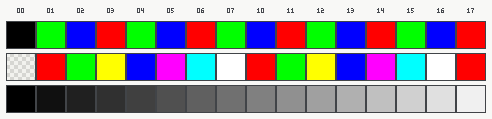
10LEAFandSCANIN CWH3pictures intentionally remain untracked underbuild/visual-assets/mit-cadr/while their content rights are unresolved. - CADR color-map specimen shows three idealized, source-derived mappings of the sixteen four-bit pixel indexes.
- MIT CADR font assets contains the source-provenance catalog, 150 BDF fonts, 150 font-sheet images, and a copy of the public source license.
- MIT CADR compiled QFASL font assets contains the compiled-artifact catalog and 19 BDF, normalized JSON, and PNG sheet exports.
- MIT CADR font usage catalog is the machine-readable companion to the per-font source audit.
Further synthesis
- a dedicated provenance and lineage history of the LM-3 Fossil repositories and restoration branches, synthesizing the pinned evidence already recorded in the individual articles.
For current launch, build, and LOD-inspection commands, see the root CADR / LM-3 guide.